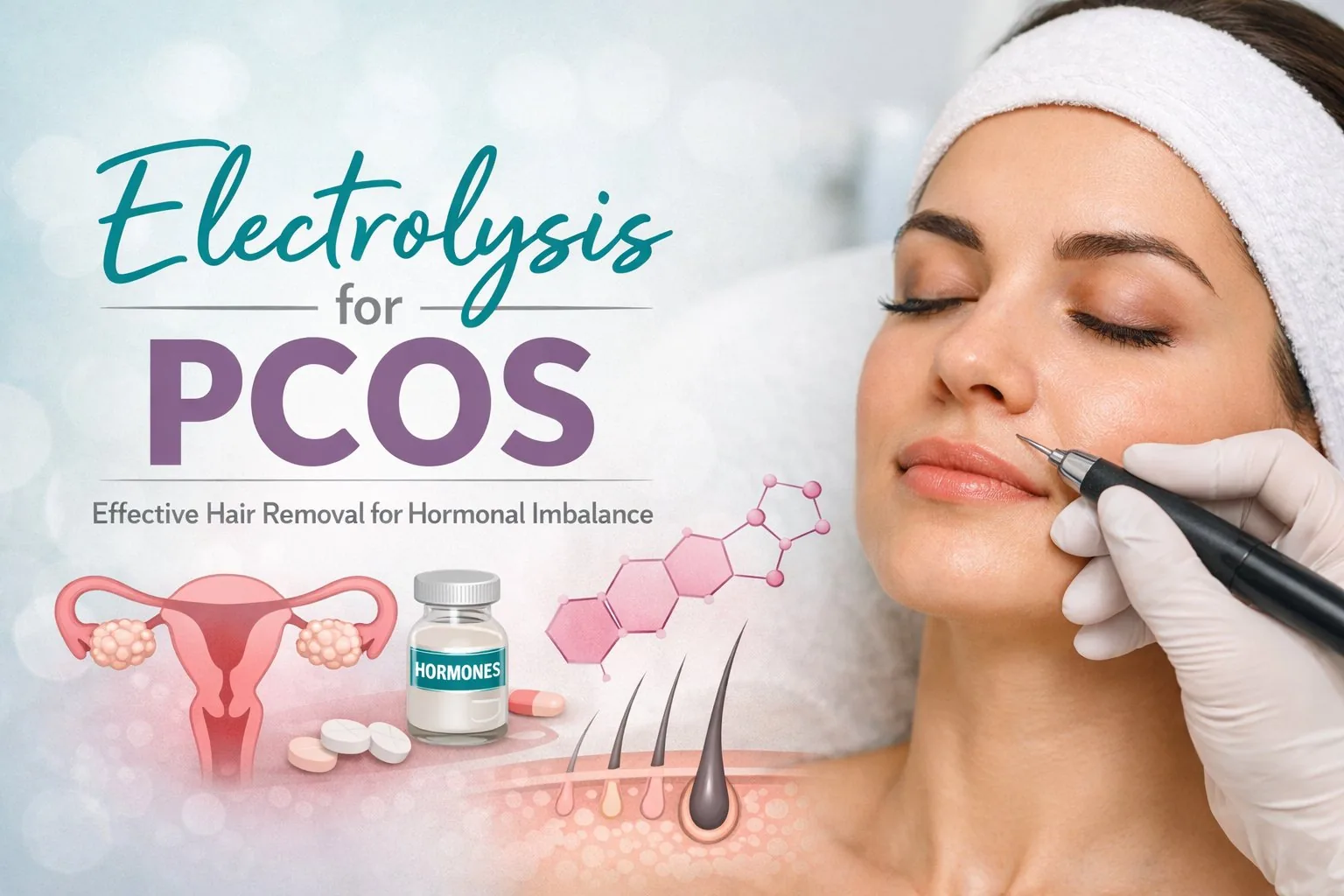
Unwanted facial or body hair can feel like a constant battle, especially when it keeps returning no matter what you try. For many women, this pattern is linked to Polycystic Ovary Syndrome (PCOS), a common hormonal condition that often causes persistent, coarse hair growth.
If you’re searching for PCOS hair removal in Melbourne, FL, understanding the root cause and choosing the right treatment can make all the difference.
What Causes Excess Hair Growth with PCOS?
PCOS is associated with elevated androgen levels (often referred to as “male hormones”), which can stimulate hair growth in areas where women typically have little or no hair. This can lead to hirsutism, or excess hair growth on the face, chest, abdomen, or back (Mayo Clinic, n.d.).
You may notice:
- Thick, dark hair on the chin, upper lip, or jawline
- Hair growth in hormonally sensitive areas
- Faster or more noticeable regrowth after removal
Because this is hormonally driven, the hair often continues to return unless the follicle itself is permanently treated.
Why Traditional Hair Removal Doesn’t Work Long-Term
Many clients come in after trying waxing, threading, shaving, or even laser hair removal.
While these methods can temporarily reduce or remove hair, they don’t permanently stop growth. The U.S. Food and Drug Administration classifies laser hair removal as permanent hair reduction, not permanent removal (U.S. Food and Drug Administration [FDA], n.d.), which is especially important for PCOS clients where hormonal stimulation may continue to activate new follicles.
In some cases, repeated temporary removal can even make the issue feel more persistent over time.
Why Electrolysis Is Different
Electrolysis is the only method recognized by the FDA as permanent hair removal (FDA, n.d.). The American Electrology Association explains that electrolysis works by inserting a fine probe into the follicle and applying energy to destroy its ability to produce hair (American Electrology Association, n.d.).
This makes it uniquely effective for PCOS because:
- It treats each follicle individually
- It works on all hair colors and skin tones
- Once a follicle is successfully treated, it cannot grow hair again
Unlike other methods, electrolysis directly eliminates the source rather than temporarily reducing growth.
What to Expect from Electrolysis for PCOS
Electrolysis is a process that requires consistency and patience. Hair grows in cycles, and each follicle must be treated during its active growth phase. With PCOS, hormonal influences may continue to trigger new hairs over time.
This means:
- Treatments are scheduled regularly
- Progress happens gradually
- Long-term results are permanent for treated follicles
With a structured plan, many clients experience a dramatic and lasting reduction in hair growth.
How to Get the Best Results
For optimal outcomes, it’s important to support your treatment plan:
- Stay consistent with appointments
- Avoid tweezing or waxing between sessions
- Work with a medical provider if you are managing PCOS symptoms
PCOS management often benefits from a combination of medical care and symptom-focused treatments (American College of Obstetricians and Gynecologists [ACOG], n.d.), making electrolysis an effective option for addressing unwanted hair.
A Permanent Solution for PCOS Hair Growth in Melbourne, FL
Living with PCOS-related hair growth can feel frustrating, but you don’t have to rely on temporary fixes forever.
Electrolysis offers a true long-term solution, helping you move beyond constant maintenance and toward lasting confidence.
If you’re looking for permanent hair removal for PCOS in Melbourne, FL, this is where that transformation begins.
Ready to Get Started?
Join the electrolysis waitlist or book a consultation to create a personalized treatment plan tailored to your skin, your hair, and your goals. Learn more about our electrolysis service in Melbourne FL
References
American College of Obstetricians and Gynecologists. (n.d.). Polycystic ovary syndrome (PCOS). https://www.acog.org/womens-health/faqs/polycystic-ovary-syndrome-pcos
American Electrology Association. (n.d.). About electrolysis. https://www.electrology.com
Mayo Clinic. (n.d.). Polycystic ovary syndrome (PCOS). https://www.mayoclinic.org/diseases-conditions/pcos/symptoms-causes/syc-20353439
U.S. Food and Drug Administration. (n.d.). Laser hair removal. https://www.fda.gov/radiation-emitting-products/cosmetic-devices/laser-hair-removal
Cranky Crow Aesthetics, where science meets confidence.